


If you plan a trip to these remarkable Mayan ruins, you’ve probably asked yourself Is it safe to drive from Cancun to Chichen Itza? The answer is yes, because the roads are generally well-maintained, federal police patrol the route, and Yucatan is actually considered one of the safest states in Mexico. Still, there are practical tips you’ll want to keep in mind, from choosing the right time of day to drive to making sure you know what to pack. By the end of this guide, you’ll be equipped with everything you need for a smooth and enjoyable journey.
Quick version: the drive covers about 120 miles (200 km) on Highway 180D and takes 2.5 to 3 hours each way. Tolls run 532 MXN per booth, each direction (2026 rate). Entry costs 697 MXN for foreign visitors (105 MXN federal INAH fee plus 592 MXN state CULTUR fee). Leave Cancun between 6 and 7am, keep your insurance current, and check the site’s open status first. Chichen Itza closed for 13 days in May and June 2026 over a vendor dispute, so that last step matters now.
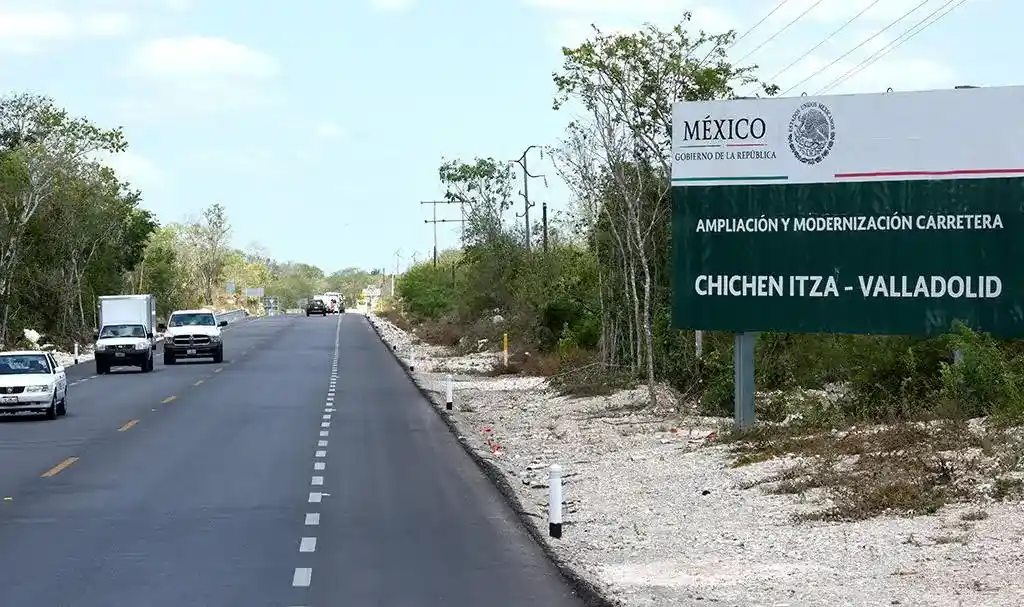
As a guide with over a decade showing travelers around the Yucatan, I get this question from almost every family planning the drive alone. And yes, you can drive from Cancun to Chichen Itza yourself. You just need a rental car, a full tank, and the details below.
Table of Contents (show)
Table of contents
- Plan your route carefully
- Understand security measures
- Is Chichen Itza open right now?
- Check your travel documents
- Do you need Mexican car insurance to drive this route?
- Renting a car or taking a bus?
- Consider private or group tours
- Pick the right time to drive
- Pack essentials for the trip
- Stop at cenotes and Valladolid
- Stay on main roads
- What to do if something goes wrong on the road
- Understand your day trip options
- Consider a day trip timetable
- What to see once you’re at Chichen Itza
- Final tips and summary
- FAQ
- Explore More Private Tours in Cancun
Plan your route carefully
Before you hit the road, it helps to be clear on where you’re going. Driving from Cancun to Chichen Itza covers roughly 120 miles on Federal Highway 180D. This toll road is your main link between the two destinations. It’s known for being in good shape with minimal traffic. You’re generally looking at a 2.5 to 3-hour drive each way, sometimes less if conditions are favorable.
Budget for the toll too. My advice is to carry pesos in small bills, since booths run 532 MXN per crossing, each direction, as of 2026. Most travelers prefer this well-trodden path because it’s direct and has fewer slowdowns. You’ll find rest areas, gas stations, and small eateries along the way for quick stops.
If you take the scenic or non-toll route instead, expect more stops and a slower pace, but also a look at smaller villages. If you want the bigger geographic picture first, check our guide on where Chichén Itzá is located. It breaks down the full map before you commit to the drive.
Understand security measures
You might have run into a well-known Reddit thread telling people not to drive this route. I get why that thread makes people nervous, but it’s mostly outdated caution dressed up as a warning. Federal police patrol Highway 180D constantly, especially near the toll booths. You’ll also pass a couple of official checkpoints (retenes, as locals call them) along the way. That’s normal here, not a red flag.
Yucatan consistently ranks as one of Mexico’s safest states. The toll road itself is built for exactly this kind of tourist traffic. What I hear most from travelers who’ve done this drive is that it felt easier than expected, mostly because the route is so direct.
Common sense still helps. Drive during daylight hours if it’s your first time making the trip. Daylight improves visibility and makes unfamiliar signs easier to read. Stick to posted speed limits too, since that keeps traffic predictable and keeps you clear of local authorities.
Is Chichen Itza open right now?
Yes, Chichen Itza is open right now, but it closed for 13 days earlier this year. That’s worth knowing before you drive all the way out. From May 19 to June 1, 2026, the site shut down over a vendor dispute. Local artisans and site authorities disagreed about relocating stalls to the new CATVI visitor center.
The site reopened with access now routed through the new CATVI center, and things have run normally since. Here’s the thing though: that underlying dispute over vendor relocation hasn’t fully settled, so it could flare up again. My advice? Check the site’s official status the morning you leave, not the week before. A quick search takes two minutes and saves you a wasted drive.
Check your travel documents
Whether you’re renting a car or borrowing a friend’s vehicle, proper paperwork is essential. Make sure you have:
- A valid driver’s license, ideally an International Driving Permit.
- Current vehicle permits and registration.
- Proof of Mexican car insurance (more on why below).
- Pesos for the highway tolls, which run 532 MXN each way.
These documents help you move along quickly if you’re ever pulled over. If you’re renting, ask about insurance coverage up front and read the fine print, so you know your deductible.
Do you need Mexican car insurance to drive this route?
Yes, you need Mexican car insurance to drive this route. It’s the single requirement I see travelers skip most often. Your US or Canadian auto policy almost never covers you south of the border. Mexico also runs on civil law, so an accident without valid local coverage can leave you personally liable on the spot.
This is the mix-up I see trip up first-time renters more than anything else on this route. Over a decade guiding for Xaman-Ha Connections has made that pattern impossible to miss. Most rental agencies in Cancun include Mexican liability coverage in their base price now, but confirm it in writing before you drive off the lot. Borrowing a car instead? Buy a short-term Mexican policy before you leave; several insurers sell day passes online.
My personal recommendation is to treat this as your first checkbox, not an afterthought. A valid policy matters more for your safety here than anything about the road itself.
Renting a car or taking a bus?
Renting a car in Cancun can cost $30 to $70 a day, depending on the season, your age, or the type of car. This gives you the freedom to stop whenever you want or extend your visit on a whim. Gas prices are fairly stable, and the roads are easy to navigate with GPS.
If you’re watching your budget, the ADO bus is a comfortable and cheap option, still starting at about $13 one-way as of 2026. The downside is less flexibility. You might arrive later than you’d like, and you’ll need to follow a fixed return schedule.
Consider private or group tours
Sometimes you want the convenience of door-to-door service without the stress of driving yourself. That’s where a Chichen Itza tour from Cancun and private tours come in. Smaller tours tend to move faster because you have fewer people to wait for, plus the guide often arranges skip-the-line access and well-timed stops. You also get expert commentary on Mayan history and culture, which enhances the overall experience.
Many travelers opt for guided outings when time is tight, especially if they want to see multiple attractions, such as a cenote or the nearby town of Valladolid, in a single day.
Pick the right time to drive
The best time to drive from Cancun to Chichen Itza is early, between 6 and 7am at the latest. My advice comes down to three reasons. The highway is at its best before traffic builds, the heat hasn’t hit yet, and you’ll beat the tour buses to the site.
Chichen Itza itself is most impressive at two slots: right at sunrise, or late afternoon starting around 3pm. Arriving early means fewer crowds and better light on the iconic Temple of Kukulcán. After 3pm, the midday rush thins out, so you can explore more peacefully.
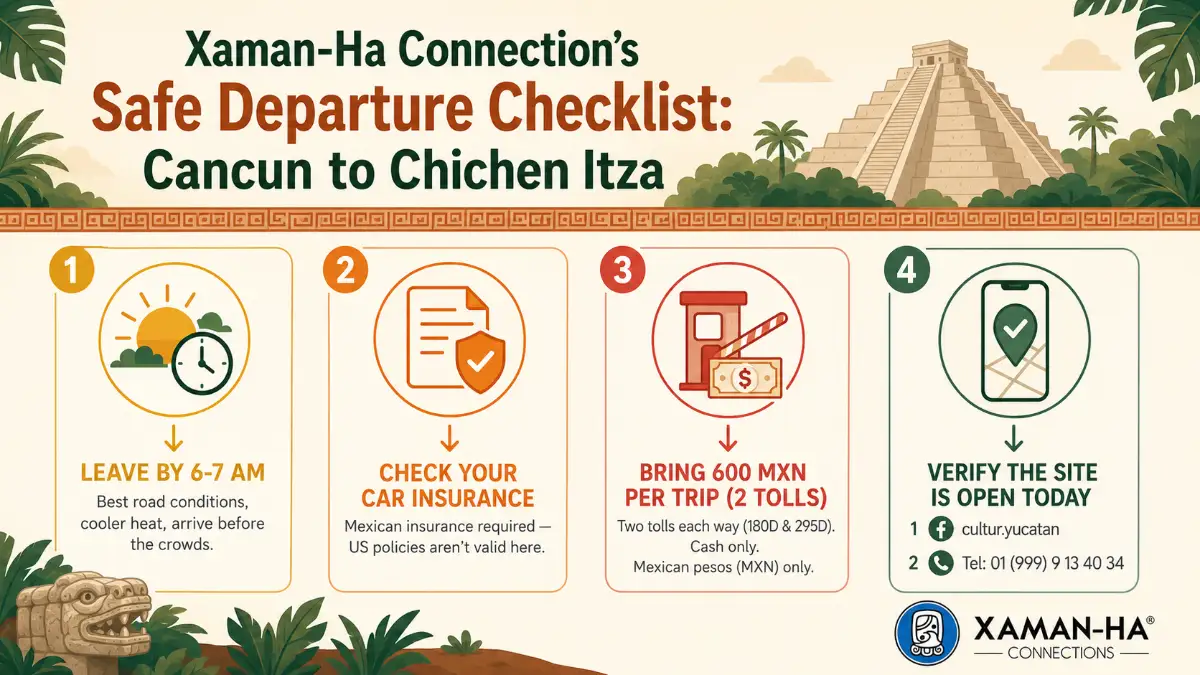
I put together a short checklist for this exact decision. It’s the question I get asked most before this drive.
Pedro’s Safe Departure Checklist
- Leave Cancun by 6am, 7am at the absolute latest.
- Confirm your car insurance is current before you start the engine.
- Carry 532 MXN in cash per toll booth, each direction.
- Check that Chichen Itza is open before you commit to the drive.
Pack essentials for the trip
A road trip in Mexico means being prepared, whether it’s a quick hop or a longer excursion. Here’s what to bring:
- Water and snacks, because you never know when you’ll feel peckish.
- Sunscreen and a hat for that Yucatan sun.
- Pesos for tolls, admission, souvenirs, and tips.
- Offline maps downloaded before you leave (Google Maps or Maps.me), since coverage gets patchy past Valladolid.
- A light jacket for an air-conditioned car or bus.
Chichen Itza has an ATM if you run short on cash, but arriving with pesos skips potential lines.
Stop at cenotes and Valladolid
Part of the fun of driving yourself is having the freedom to explore nearby attractions, like famous cenotes (natural sinkholes with freshwater). One highly recommended spot is Ik Kil Cenote, located just a short drive from Chichen Itza. It’s a popular place to cool off after hours in the sun, with a deep pool surrounded by lush greenery. You’d typically want an hour or so here, especially if you plan on swimming.
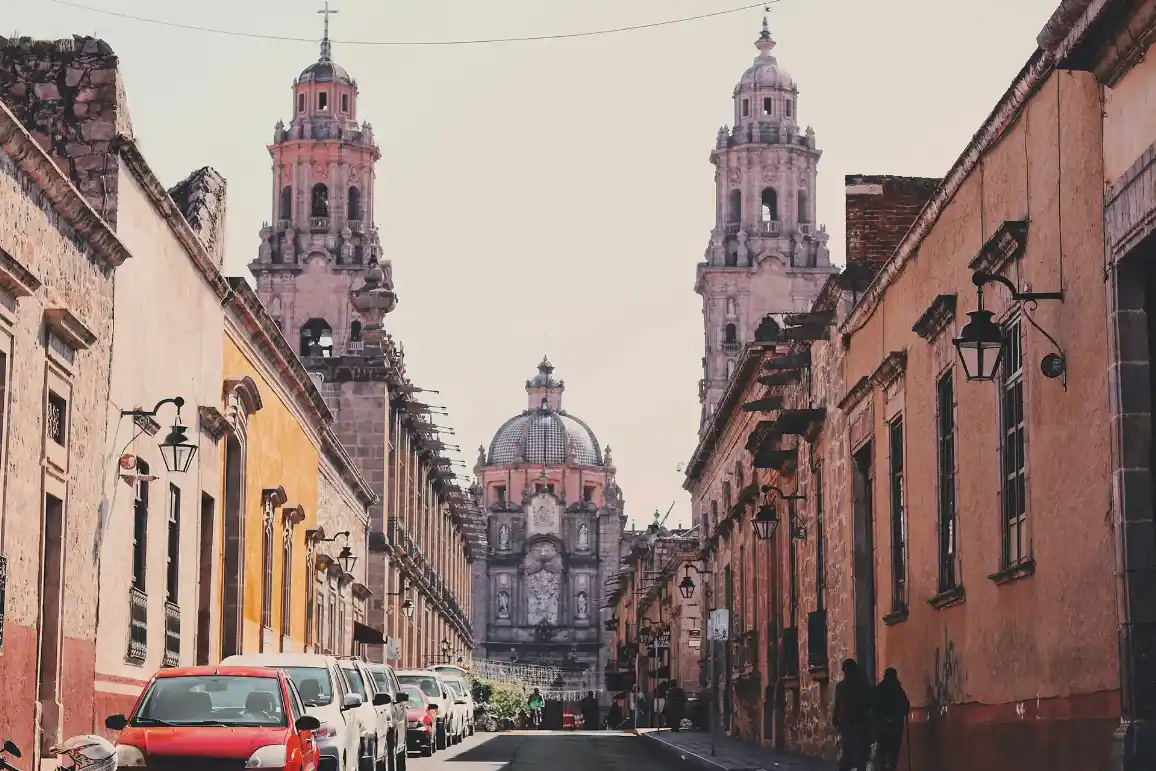
The town of Valladolid is another worthwhile stop. Known for its colonial charm, it has a lively main square, colorful streets, and yummy regional snacks. If you have time, stroll around the zócalo (town square) or sample local dishes before getting back on the road. You’ll get a taste of authentic Mexican culture that you might miss if you just zip straight from Cancun to the ruins and back.
Stay on main roads
Yes, Mexico’s side roads can be inviting, but they’re often slower and less straightforward. If safety is a top concern, it’s best to stick to the main highways. These are typically more populated, well-marked, and patrolled, so you won’t feel isolated if your car gets a flat or you need assistance. Taking a few scenic detours is fine if you have the time, yet be aware that smaller roads might lack clear signage and consistent cell service.
If you ever wonder, is chichen itza in cancun?, the short answer is no, but they’re within a few hours of each other. The main highways in the region, particularly Highway 180D, were designed to connect significant tourist destinations, making your drive straightforward. As always, maintain a safe speed and keep an eye out for speed bumps near towns and local communities. Some can catch you by surprise if you’re not paying attention.
What to do if something goes wrong on the road
If something goes wrong on the road, call 078. That number reaches Angeles Verdes, Mexico’s free roadside assistance service run by SECTUR, Mexico’s federal tourism authority. Their green trucks patrol the toll highways to help stranded drivers. The service itself is free, though parts and fuel come out of your pocket.
I always tell my groups to save that number before they leave the hotel. Angeles Verdes handles flat tires, dead batteries, and minor mechanical issues, and their crews carry radios for bigger problems. On a route this monitored, help doesn’t take long to arrive.
For anything more serious, like a collision, stay with your vehicle and call 911. Federal police patrol this corridor regularly. Don’t move vehicles before authorities arrive, since that can complicate an insurance claim later.
Understand your day trip options
Driving isn’t the only way to have a rewarding visit, and not everyone wants to be behind the wheel. Organized tours often bundle in additional destinations like cenotes, a lunch buffet, or a stop in Valladolid. They can be a good fit if you like a structured itinerary. Most travelers agree that it’s well worth the trip, whether you drive yourself or hop on a tour bus.
If you’re the type who loves forging your own path and you’re comfortable handling basic road trip logistics, renting a car is a breeze. However, if the idea of navigating and scheduling everything seems more stressful than fun, tours and private drivers remove those worries. In a smaller group setting, you’ll likely save time on boarding, bathroom breaks, and you might score a few insider tips from a knowledgeable guide.
Consider a day trip timetable
If you’re doing a DIY approach with the 6-7am departure in mind, here’s how the day breaks down.
- 6:00 to 6:30am: Leave Cancun while the highway is quiet.
- 6:30 to 9:30am: Drive to Chichen Itza on Highway 180D.
- 9:30am to 1:30pm: Explore the ruins before the midday heat peaks.
- 1:30 to 3:00pm: Stop at Ik Kil Cenote, longer with lunch.
- 3:00 to 6:00pm: Return to Cancun.
Keep buffer time for restroom breaks or unexpected traffic. Skip demanding evening plans in Cancun that same day, since an early start still adds up to a long one.
What to see once you’re at Chichen Itza
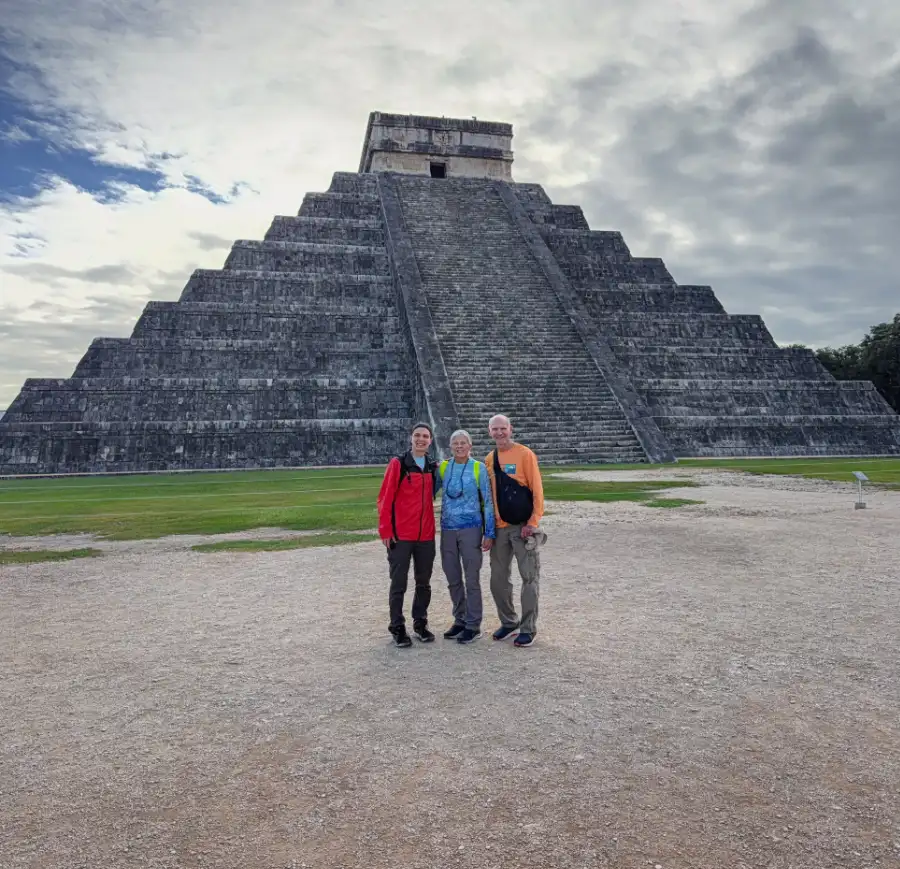
Once you’re through the gate, a handful of structures make the drive worth it. Entry costs 697 MXN for foreign visitors, split between the federal INAH fee and the state CULTUR fee. El Castillo anchors the site, its four staircases adding up to 365 steps, one for each day of the year. Climbing it has been banned since 2006, but you can still walk right up to its base.
Just past El Castillo sits the Great Ball Court, the largest ballcourt found anywhere in Mesoamerica. Nearby, the Tzompantli platform (the name archaeologists use for this carved skull rack) marks a ceremonial space. Connecting it all are the sacbeob, raised white stone roads the ancient Maya built to link temples and plazas across the city.
I always tell first-time visitors to budget at least three hours here. There’s more ground to cover than photos suggest. If you want the fuller story behind what Chichén Itzá is, that guide fills in what this section doesn’t.
Final tips and summary
So, is it safe to drive from Cancun to Chichen Itza? For most travelers, absolutely. As long as you plan ahead and stay on the recommended routes, it’s as simple as any other highway drive. Yucatan’s roads are known for their clarity, and federal law enforcement adds peace of mind.
Never sending a guest onto this route without the full picture is something the whole Xaman-Ha Connections team refuses to skip. Tolls, insurance, and current site status, all included. That’s the difference between a smooth day and a frustrating one.
Keep an eye on road signs and store key documents where you can reach them quickly. The site closed temporarily earlier in 2026, so a quick status check before you leave is good planning, not overcaution. Otherwise, jump on a bus or book a tour instead. For an even deeper look at drive times, explore how far is Chichen Itza from Cancun.
FAQ
How much are the tolls from Cancun to Chichen Itza?
The toll runs 532 MXN per booth, each direction, as of 2026. Carry pesos in small bills, since not every booth takes cards. Budget for the return trip separately, since it’s charged again.
How much does parking cost at Chichen Itza?
Parking at Chichen Itza costs somewhere between 124 and 199 MXN. The range is informal, since the lot isn’t run on a single fixed rate. Bring small bills and expect to pay an attendant directly.
Can you drive from Cancun to Chichen Itza?
Yes, you can drive from Cancun to Chichen Itza yourself. It’s a straightforward 2.5 to 3-hour trip on Highway 180D. Thousands of travelers do it every year without a private guide.
Whether you’re renting a car, booking a small group outing, or opting for a private service, your experience comes down to preparation and personal preference. Enjoy the drive, stay curious, and you’ll have a memorable journey exploring one of the world’s most iconic archaeological treasures. Safe travels, and ¡nos vemos pronto!
Explore More Private Tours in Cancun
Visit our homepage to explore all our services, or browse our Cancun private tour catalog for private, all-inclusive tours departing from Cancún.
