 Skip to the content
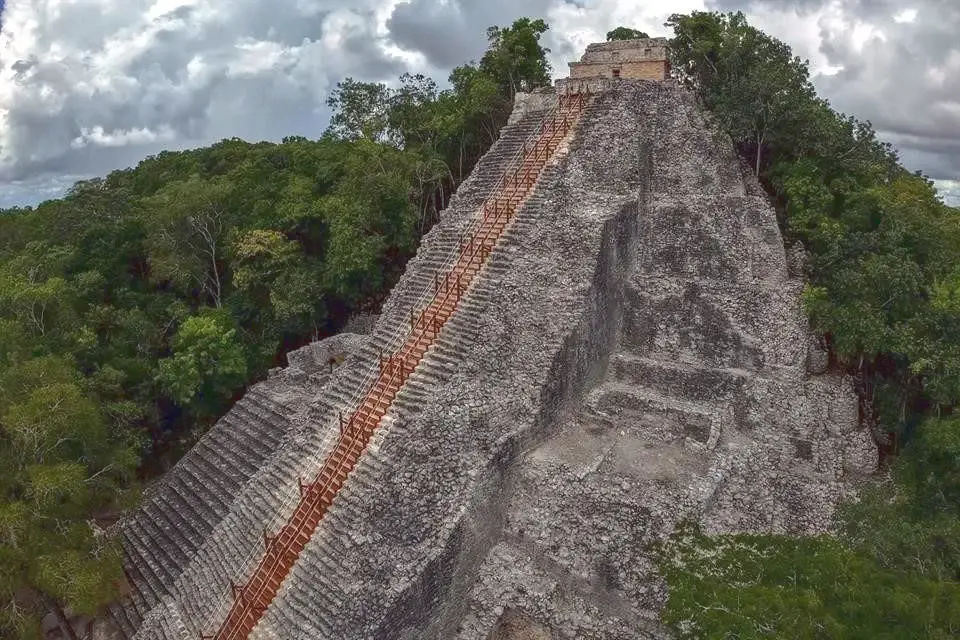

Coba ruins is an ancient Maya city set deep in the jungle of Quintana Roo, Mexico. As of December 8, 2025, it is once again the only major archaeological site in the Yucatan Peninsula where you can climb the main pyramid.
Coba is the site that almost never comes up first. My guests ask about Chichen Itza and Tulum, but almost nobody arrives with Coba already on their list. And yet, after years of leading private tours here, it’s the one that surprises people most.
The ruins sit 47 km (29 miles) northwest of Tulum and open daily at 8:00 AM. Entry costs $210 MXN for foreign visitors plus a separate $120 MXN ejido community fee. INAH reopened Nohoch Mul for climbing on December 8, 2025, after a six-year closure, with a new wooden staircase over the original 120 stone steps. Climbing runs from 8:00 AM to 3:30 PM in groups of 15, with a 15-minute summit limit. To experience Coba at its best, plan to be at the entrance by 8:00 AM.
Table of Contents (show)
Table of contents
- Coba Archeological Site History
- Can You Climb the Coba Pyramid in 2026?
- Pricing List for Coba Ruins (The Two-Ticket System Explained)
- The Perfect Time to Arrive at Coba
- Renting Bikes at Coba
- What to See Inside Coba Beyond the Pyramid
- Getting to Coba
- Coba or Tulum?
- Nearby Cenotes to Visit After Coba
- Frequently Asked Questions
- See You at the Pyramid
- Explore More Private Tours in the Riviera Maya

Coba Archeological Site History
Coba is one of the most important ancient Maya cities in the northern lowlands, with an estimated 50,000 inhabitants at its height between 600 and 900 CE. The site covers more than 70 square kilometers of jungle. Archaeological research confirms Coba had a distinctive concentric urban layout of high-status architecture near the ceremonial core. This pattern is rare among major Maya cities.
What sets this coba archaeological site apart from Tulum or Chichen Itza is scale and jungle depth. The coba mayan ruins complex built 45 sacbeob: raised white limestone roads that connected its different districts. The longest of those roads runs 100 km to Yaxuná in Yucatán, the longest known ancient road in the Maya world. Most of the sacbeob are now buried under forest. Walking through Coba feels less like touring a museum and more like moving through an ancient city that’s still being uncovered.
And since December 2025, it is also the only site in the region where climbing the main pyramid is permitted.
Can You Climb the Coba Pyramid in 2026?
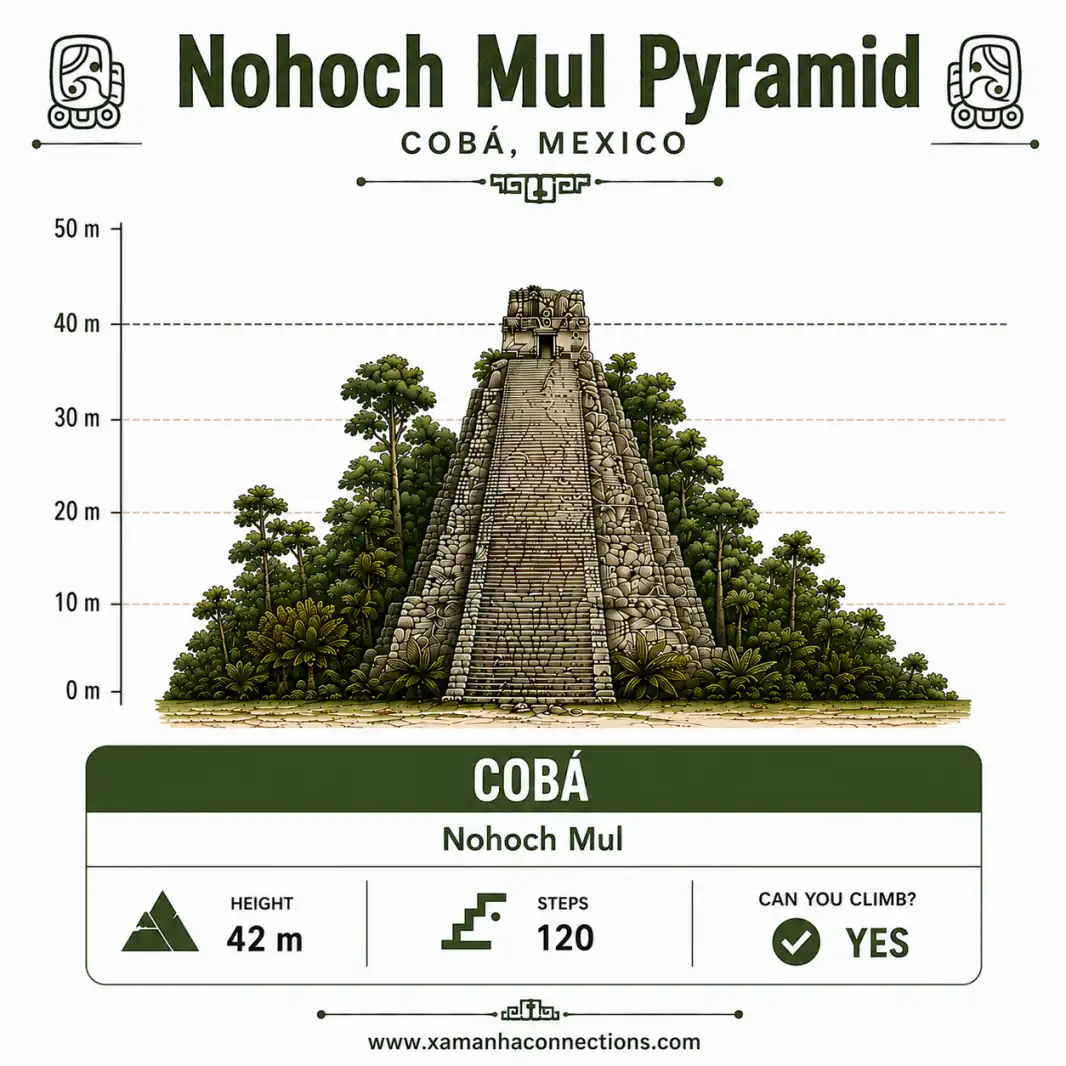
Yes. As of December 8, 2025, climbing Nohoch Mul is officially open again after six years of closure.
INAH (Mexico’s National Institute of Anthropology and History) inaugurated a new wooden staircase installed directly over the original 120 stone steps. The structure protects the ancient surface while giving visitors safe access to the 42-meter (138-foot) summit. The views from the top (a canopy of jungle in every direction) are unlike anything else in the region.
Here’s what you need to know before heading up:
- Climbing hours: 8:00 AM to 3:30 PM (the site stays open until 5:00 PM, but the pyramid has its own cutoff)
- Group size: maximum 15 people on the staircase at any time
- Summit limit: 15 minutes per group to keep the line moving
- Footwear: closed-toe shoes with grip are mandatory. Sandals and heels are not allowed on the wooden stairs
- Weather: climbing suspends automatically in rain or strong wind
- Physical restrictions: INAH advises against climbing for visitors with vertigo, cardiovascular conditions, pregnancy, or serious joint problems
In my experience, about half the visitors who reach the base actually go up. The height is 42 meters, and when you’re standing at the bottom looking straight up at that angle, it’s more imposing than it looks in photos. My advice: go early, wear the right shoes, and pace yourself. The descent is the part that surprises people most. Take it slow coming down.
Most articles you’ll find online still say climbing is permanently closed. That information is outdated. INAH inaugurated the new staircase on December 8, 2025. If someone told you Coba’s pyramid is off-limits, check when their article was written.
Pricing List for Coba Ruins (The Two-Ticket System Explained)
Visiting Coba requires two separate payments, collected at two different windows. This trips up almost every first-time visitor, so let me explain what’s actually happening.
The two fees
| Fee | Amount | Who pays |
|---|---|---|
| INAH federal entrance | $210 MXN | Foreign visitors |
| INAH federal entrance | $105 MXN | Mexican nationals and foreign residents |
| Ejido community fee | $120 MXN | Everyone |
| Parking | $70 MXN | Drivers |
| Media fee (GoPro / selfie stick) | $63 MXN | Visitors with video equipment |
The ejido fee exists because part of the Coba archaeological zone sits on communal land held by the local Maya community (an ejido). The INAH ticket covers access to the federal archaeological zone. The ejido fee supports the local community directly. They are separate jurisdictions. Both are legitimate, and both are required.
Cash is essential. Card terminals fail frequently at Coba. Come with at least $1,200 MXN per person in small bills (50- and 100-peso notes). There is no ATM on site. The nearest one is roughly 40 minutes away by car. I send my guests a reminder the evening before every tour. Each season, someone still arrives with only a card.
Two more notes worth knowing: Sundays are free for Mexican nationals and residents, so the site runs noticeably more crowded on Sundays. And drone use is strictly prohibited without pre-authorization from INAH.
Coba Locations on the Map
The Perfect Time to Arrive at Coba
The best time to arrive is right when the site opens at 8:00 AM. If you show up at 8:30 AM, you’ve already lost the quietest window of the day.
Here’s what that early window actually looks like: between 8:00 and 9:30 AM, you have the jungle paths and the pyramid almost to yourself. The light filters through the ceibas, the birds are going, and the sacbeob feel like they belong to you. By 10:00 AM, the first large buses from Cancún and the Xcaret complex start rolling in. The bike rental queue gets chaotic. The jungle silence disappears, my friends.
I call the first 90 minutes the Zona Dorada. Everything after is a different experience at the same site.
Here’s my recommended pickup time from each origin, based on arriving at the entrance by 7:50 AM:
| Origin | Distance | Drive time | Pickup |
|---|---|---|---|
| Tulum (center) | 47 km | ~45 min | 6:50 AM |
| Playa del Carmen | 109 km | ~1h 35 min | 6:00 AM |
| Valladolid | 61 km | ~50 min | 6:45 AM |
| Cancún (Hotel Zone) | 176 km | ~2h 30 min | 5:15 AM |
These are private transport times on clear roads. Shared tours with multiple hotel stops typically arrive after 10:00 AM. That’s the gap.
Renting Bikes at Coba
Yes, and I say this with no hesitation. The bike is not optional.
From the entrance to the base of Nohoch Mul pyramid is nearly 2 km. In high season, temperatures reach 38 to 40°C (100 to 104°F). Walking the full circuit on foot in that heat is doable, but I’ve watched marathon runners slow to a crawl by the halfway point. The bike rental at the entrance costs $80 to $100 MXN. It gives you complete freedom: stop whenever something catches your eye, explore side paths, and still have energy left when you reach the pyramid.
The alternative is a bicitaxi (a pedal-powered tricycle with a local driver) at around $150 to $200 MXN for two people. Bicitaxi drivers often know the site well and will point out things you’d walk right past. More than once I’ve heard details from a bicitaxi driver that I hadn’t come across anywhere else.
One thing commercial travel articles consistently understate: bring strong biodegradable insect repellent and apply it before you enter the site. Coba is genuine jungle. The mosquitoes are real, they’re active during the day, and they don’t care about your tour itinerary. This is not a footnote. It’s part of the packing list.
What to See Inside Coba Beyond the Pyramid
Cobá without context is a pyramid in the jungle. With context, it’s an entire ancient city still waiting to be discovered. That’s the difference a good guide makes here. Not the pyramid itself.
The site has four main structural groups worth exploring:
- Grupo Cobá: the oldest structures, including the Iglesia pyramid and a ballcourt. These are close to the entrance and often overlooked because visitors rush straight to Nohoch Mul
- Grupo Nohoch Mul: home to the main pyramid and the Postclassic-era painted temple at its base
- Conjunto Pinturas (Paintings Group): a set of structures and carved stelae, including monuments with some of the best-preserved bas-relief carvings on site
- Grupo Macanxoc: a concentration of stelae documenting Coba’s dynastic history, including records of female rulers who held power here during the Classic period
Modern 3D laser-scanning techniques have deciphered many of the eroded hieroglyphs at Macanxoc in the last decade. That history is embedded in the stone. You just need someone to show you where to look.
The sacbeob themselves are worth pausing at. In several places, you can see the elevated limestone edges of these ancient roads disappearing into the trees in both directions. Knowing that one of them runs 100 km to Yaxuná makes the jungle feel less random and more like the infrastructure of a real city.

Getting to Coba
Coba sits off Highway 109, between Tulum and Valladolid in Quintana Roo. Self-driving is the most flexible option and gives you full control over arrival time.
- Car or private transfer: From Tulum, take Highway 109 northwest for 47 km (about 45 minutes). From Cancún, head south on Highway 307 to the Tulum junction, then connect to 109 (about 2.5 hours). Parking is available at the site entrance.
- Colectivo from Tulum: Shared vans run from the Tulum bus terminal to Coba for around $60 to $80 MXN per person. They’re inexpensive but operate on their own schedule, usually arriving mid-morning, well past the Zona Dorada.
- ADO bus: ADO offers intercity bus service from Cancún, Tulum, and Playa del Carmen to the Coba area. Check current schedules directly with ADO, as departure times change seasonally.
- Tren Maya: The Tren Maya serves Tulum Station and Nuevo Xcán Station. The connection from those stations to the ruins requires a local transfer and adds time. For a tightly planned day trip, driving directly is more efficient.
If you’re staying in the Riviera Maya and want to explore more ruins nearby, read our Tulum archaeological site guide. This is the closest major Maya site to Coba and an easy add-on to the same-day trip.
Coba or Tulum?
The most common question I hear from first-time visitors to the Riviera Maya: Coba or Tulum? Both are in Quintana Roo, both work as a day trip, and most people only have time for one.
Chichen Itza is a different decision entirely — it sits in Yucatán state, two-plus hours from Tulum, and belongs on a separate day or a separate trip.
For the Quintana Roo choice:
Tulum ruins has the best setting in Mexican archaeology: a clifftop temple with the turquoise Caribbean behind it. The photographs are real. But the site is small, the circuit takes about an hour, and around 3,287 visitors per day pass through it. Climbing is not permitted.
Coba ruins is where about 1,016 visitors per day arrive, cycle through jungle paths, and reach a pyramid they can actually climb. It takes longer, goes deeper, and delivers a different kind of payoff — less photogenic, more immersive.
| Coba Ruins | Tulum Ruins | |
|---|---|---|
| Setting | Jungle | Coastal cliffs |
| Foreigner entry (approx.) | $210 + $120 MXN | $515 MXN |
| Climbing | Yes (since Dec 2025) | No |
| Avg daily visitors | ~1,016 | ~3,287 |
| Time needed | 2.5 to 4 hours | 1 to 2 hours |
| Shade | High (jungle canopy) | Low (exposed coast) |
The good news: you don’t have to choose. Arrive at Coba by 8:00 AM, finish by 10:30 AM, and you’re at Tulum ruins in under an hour.
Nearby Cenotes to Visit After Coba
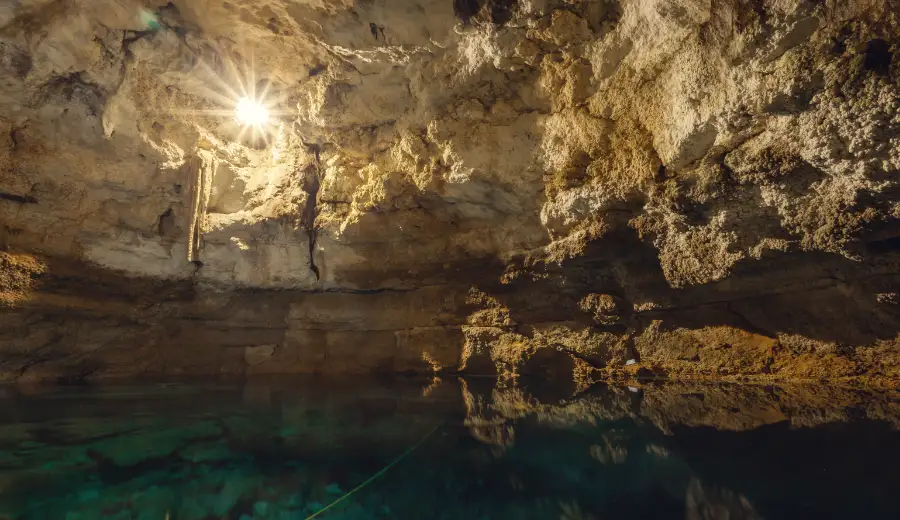
The three cenotes closest to Coba ruins are Cenote Choo-Ha, Tankach-Ha, and Multum-Ha. They sit a few kilometers from the site entrance and make for a natural second stop after finishing the ruins.
Each cenote costs approximately $100 MXN (~$5 USD) per person. Life jackets are mandatory and available for rent at $30–50 MXN (~$2–3 USD). Cash only at all three locations.
My personal recommendation: skip the crowd at Choo-Ha and go to Cenote Multum-Ha instead. Multum-Ha requires descending about 18 meters on a spiral staircase into an underground cavern. Because of that access requirement, large buses don’t include it. If you arrive around 10:30 AM after finishing the ruins, you’ll often find it empty or close to it. The water is crystalline, the cave is naturally cool, and the swim after two hours in the heat feels extraordinary.
For a private cenote experience away from the standard tourist route, our private Coba and cenote tour handles the full day: door-to-door transport, early arrival during the Zona Dorada window, and access to a cenote outside the mass-tour circuit.
Frequently Asked Questions
Can you still climb the Coba ruins pyramid in 2026?
Yes. INAH officially reopened Nohoch Mul on December 8, 2025, after a six-year closure. A new wooden staircase now covers the original 120 stone steps. Climbing runs from 8:00 AM to 3:30 PM in groups of 15, with a 15-minute summit limit. Many articles online still say it’s closed. That information is outdated.
How long does Coba ruins take to visit?
Plan for 2 to 3 hours with a bike rental. Add an extra hour if you go slowly or want to explore the secondary structural groups. A full day including a cenote stop typically runs 4 to 5 hours from arrival to departure.
Is Coba ruins worth visiting?
In my honest opinion: for the right person, completely. The visitors who arrive without strong expectations are usually the ones who walk out in silence and need a minute before saying anything. That reaction doesn’t happen at every site.
What should I bring to Coba ruins?
Four things that matter most:
- Cash in small bills (plan for at least $1,200 MXN per person)
- Closed-toe shoes with grip (required for climbing Nohoch Mul)
- Biodegradable insect repellent
- 1.5 liters of water per person minimum
Sun protection (hat, rash guard, or biodegradable sunscreen) rounds it out.
Can you visit Coba ruins and Tulum ruins in the same day?
Yes, easily. Arrive at Coba by 8:00 AM, finish by 10:30 AM, and drive the 47 km to Tulum for an early afternoon visit. Both sites close at 5:00 PM. Starting at Coba first is the right order. The ruins get crowded as the day progresses, and Coba’s early morning is its best feature.
See You at the Pyramid
Cobá is the site I find hardest to explain before you arrive. Once you’re inside, no explanation is needed.
If you want a day where logistics are handled and you arrive in the Zona Dorada without worrying about parking or tickets, have a look at what we do. Either way, go early. The jungle belongs to you in those first 90 minutes.
¡Nos vemos pronto!
Explore More Private Tours in the Riviera Maya
Visit our homepage to explore all our services, or browse our Riviera Maya private tour catalog for unforgettable experiences in the Riviera Maya.
