
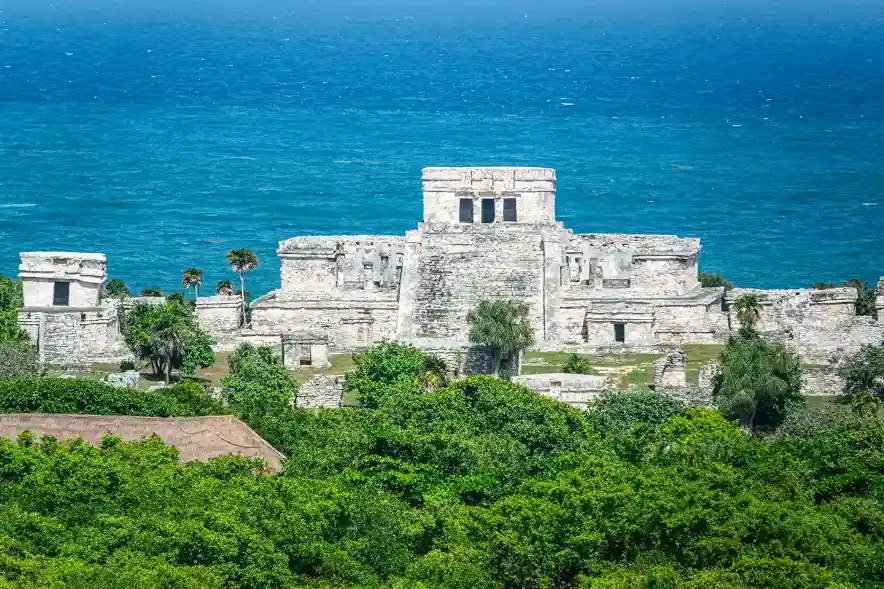

Tulum Ruins sit on a limestone cliff above the Caribbean, the only major Maya site built right on the coast. In 2026, a new government fee schedule actually made them cheaper to visit. Mexicans pay 110 MXN total for all three sites inside the complex, foreigners pay 265 MXN, both below the old flat rate.
I’m an INAH-certified guide, the same institute that runs the site. I lead private tours here, and I watch people make two mistakes constantly. Showing up around 11am instead of 8am. Trusting whatever price a stranger near the entrance quotes them.
Table of Contents (show)
Table of contents
- Tulum Visit Cost Calculator:
- Why Is Tulum Worth Visiting?
- What is the Parque del Jaguar?
- What to Know Before You Go
- How Do I Plan My Visit to Tulum Ruins?
- Exploring the Ruins: A Visitor’s Guide
- Top Tips for Your Visit
- Tulum Archaeological Site FAQ
- Can you climb the ruins?
- How much time should you plan for a visit?
- Are the Tulum Temples worth visiting compared to other sites?
- Are the Outside Vendors Official?
- What currencies are accepted for payment at the Tulum Mayan Temples?
- Are these ruins Mayan or Aztec?
- Chichen Itza or Tulum: which should you visit?
- Explore Our Private Tours
Tulum Visit Cost Calculator:
Quick summary before we get into the details. The Tulum Archaeological Site (its official INAH name, though everyone just says Tulum Ruins) is open daily from 8am to 5pm, last entry 3:30pm. Under the 2026 fee decree, Mexican citizens pay 80 MXN for the archaeological zone and 30 MXN for Parque Nacional Tulum, free on Sundays. Parque del Jaguar is free for Mexicans, about 110 MXN total. Foreigners pay 65, 100, and 100 MXN respectively, 265 MXN for all three. Bring cash and water; cards aren’t accepted at the gate. There’s almost no shade on site, so sun protection matters, and the earlier you arrive, the better your visit goes.
Why Is Tulum Worth Visiting?
Yes, the Tulum Ruins are worth visiting. You get Maya temples built directly on a cliff above the Caribbean, a combination that exists nowhere else. It’s also walkable, one you can cover in under two hours. That mix of history and ocean view is why this spot outranks most ruins on a first Mexico itinerary.
The site sits on the Caribbean coast of Mexico’s Yucatan Peninsula, in Quintana Roo. If you haven’t pinned down where is Tulum relative to Cancun or Playa del Carmen, that’s worth a quick read first. In INAH paperwork it’s the Tulum Archaeological Zone; travelers searching Tulum Mayan Ruins are looking at this same place.
What Makes Tulum’s Cliffside Location So Unique?

It’s unlike any other Maya ruin. Tulum is the only major Maya city built directly on the coast, on limestone cliffs about 12 meters (39 feet) above the water.
The contrast between jungle, stone temples, and turquoise Caribbean sets this apart from every inland site in the region. Ocean views appear from several spots, many framed by El Castillo. When people compare Chichen Itza vs Tulum, it’s this cliff-and-ocean combination that tips the vote, even though Chichen Itza wins on scale.
What Is the Rich History Behind These Ruins?
Tulum was built during the Late Postclassic period, roughly 1200 to 1450 CE, one of the last major Maya cities built before Spanish contact. Its coastal position wasn’t just scenic. It made Tulum a working port, moving canoe cargo along the coast and inland to Coba, the larger city it served.
Obsidian was the main commodity here, brought from Ixtepeque in Guatemala, nearly 700 km away, along with jade from farther south. That’s a serious Postclassic trade hub, not a ceremonial outpost with a nice view.
Structures like the Temple of the Frescoes doubled as ceremonial centers for rituals and astronomy. Exploring these temples on your own or with a guide is easily one of the best things to do in Tulum.
What Was Tulum Called Before It Was Tulum?
Zama. That’s the name most historians believe the Maya used, meaning “dawn” or “sunrise,” fitting for a city facing due east over the water. Tulum came later: in Yucatec Maya it means “wall” or “fence,” describing the limestone barrier still surrounding three sides of the site.
Modern Tulum Pueblo borrowed the newer name, not the original. So when a guide says the city was named for its wall, not its sunrise, that’s the historically accurate version. Zama is just the prettier story.
What Happened to Tulum After the Spanish Arrived?
The Maya kept living at Tulum for decades after first contact in 1518, when Juan Diaz spotted the city during Juan de Grijalva’s expedition. It’s one of the earliest European sightings of a Maya city still in use.
The site wasn’t abandoned overnight. Occupation continued into the late 1500s, likely ending from disease, disrupted trade, and the collapse of Maya coastal networks under Spanish pressure.
Then Tulum vanished from outside knowledge for almost 300 years. It resurfaced in 1843, documented by explorer John Lloyd Stephens and artist Frederick Catherwood. Their book, Incidents of Travel in Yucatan, included Catherwood’s drawings of El Castillo, basically why the world found out Tulum existed at all.
What is the Parque del Jaguar?
Parque del Jaguar is a protected natural area attached to Tulum’s ruins. It opened in recent years to give the site a buffer of jungle and coastline, instead of a cleared parking lot right at the entrance.
I like bringing guests through here early, around 9am, right after the ruins. It’s usually close to empty then, which on a site this popular says a lot.
Is Parque del Jaguar Worth Visiting?
Yes. It’s well maintained, and the mix of restored jungle trail and beach access makes it worth the extra half hour. Free electric buses run to the ruins, plus a small museum with real air conditioning, rare enough here to mention. There’s also direct beach access you won’t find anywhere else on site.
What Makes Parque del Jaguar Special?
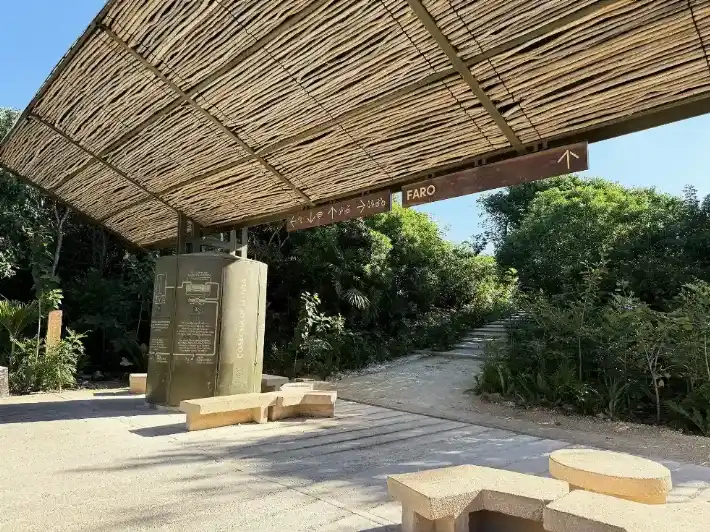
Here’s what stands out.
- Free electric buses connect Parque del Jaguar to the archaeological site and the train station.
- A small museum, closed on Mondays, with air conditioning that’s a genuine relief in August.
- Direct beach access from a jungle trail, without walking back through the ruins.
- Quieter, seaside stretches of coastline than the main site gets.
How Much Does It Cost to Go to Parque del Jaguar?
Parque del Jaguar itself is free for Mexican citizens and 100 MXN (about $5 USD) for foreign visitors, under the 2026 fee decree. That’s down from the flat 295 MXN every visitor used to pay, regardless of nationality.
Jaguar Park is only one of three separate admissions if you want to see everything. Here’s the quick breakdown.
| Site | Mexican citizens | Foreign visitors |
|---|---|---|
| Zona Arqueologica de Tulum (INAH) | 80 MXN | 265 MXN |
| Parque Nacional Tulum (CONANP) | 30 MXN (free Sundays) | 65 MXN |
| Parque del Jaguar | Free | 100 MXN |
| Total, all three | 110 MXN | 265 MXN |
I’ll cover exemptions and payment rules later in this guide. For now: bring cash, and budget for all three if you want the beach at Jaguar Park too.
What to Know Before You Go
Here’s the short version, in case you’re skimming before you land.
| What you need to know | 2026 details |
|---|---|
| Hours | 8am to 5pm daily, last entry 3:30pm |
| Total cost, all 3 sites | 110 MXN Mexicans / 265 MXN foreigners |
| Payment | Cash only, pesos only |
| Parking | Official lot around 100-150 MXN/day, fills by 9:30-10am |
| Best time to arrive | 8am, right at opening |
| Shade | Almost none. Bring a hat and water |
| Museum | At Parque del Jaguar, air-conditioned, closed Mondays |
Everything below goes deeper: the history, the structures, and what I’ve learned guiding groups through here for over a decade.
How Do I Plan My Visit to Tulum Ruins?
This next stretch covers timing, tickets, transport, and what to bring. First stop in Tulum? Start with our complete Tulum travel guide for where to stay, eat, and what else to do.
Is a Private Tulum Tour Worth It?
Depends on how you’d rather spend your morning. Going solo is genuinely straightforward: buy your ticket, get a wristband with it, and walk in. A certified guide is usually available on the spot, 200 to 800 MXN by group size. Plenty of travelers do exactly that and have a great visit.
A private tour earns its cost by solving two problems I see constantly. Cheap online tours quote a low price, then charge separately for fees, lunch, and extras once you’re committed. Shared tours also run late collecting guests from several hotels, so you arrive after 10am, packed and hot. A private, all-inclusive tour skips both: one pickup, no surprise charges, an early schedule.
At Xaman-Ha Connections, our Tulum ruins private tour gets you that early start with a personal guide, everything included. I’ve made getting clients here by 8am a habit, not a suggestion.
Best Time to Visit
What Is the Best Time of Day to Visit?
8am, right when the gates open. That’s not really about beating the crowds, because you’re not going to beat them. Tulum is one of the most visited archaeological sites in Mexico. Expecting to have it to yourself is like expecting an empty Statue of Liberty. It’s a landmark. People show up.
What actually changes your experience is getting there first. Tour buses start rolling in around 9 or 10am. Walk through the gate at 8 and you get roughly 90 minutes of a calmer site, cooler air, and better photo light.
My rule of thumb: earlier always beats emptier hopes.
How Crowded Does It Really Get?
Very, especially between 10am and 2pm. More than 1 million people visit Tulum in a typical year, the third most visited archaeological site in Mexico behind Chichen Itza and Teotihuacan. That’s INAH’s last published figure, taken in 2025.
Travelers I’ve guided through here often expect a quiet, undiscovered ruin because of how it looks in photos. It never matches that. Cruise ship days out of Cozumel add a second wave by mid-morning.
None of this means skip it. It means treating Tulum like the popular landmark it is, and planning around that fact instead of a fantasy of having it to yourself.
What Is the Best Time of Year to Visit?
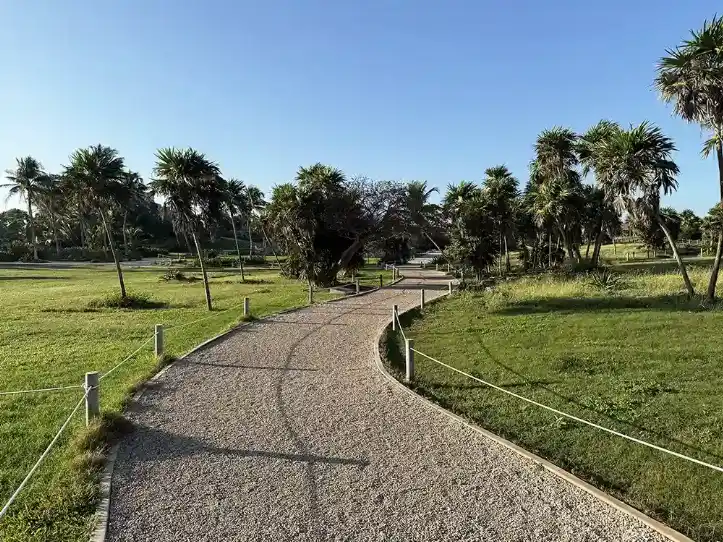
December through March, hands down, for dry, cooler weather: mid to high 70s Fahrenheit (mid-20s Celsius), rain rare. It’s also high season, so expect bigger crowds and higher prices.
June through September flips that: real heat, real humidity, afternoon rain most days. I used to tell people December is simply the best month, and it’s still the most comfortable one. But if lighter crowds matter more to you than comfort, summer thins out relative to the December peak. Just come prepared for the heat — nothing here is ever truly empty.
There’s almost zero shade across the site, no trees over the main plazas. Hydration and a hat aren’t optional, they’re the difference between enjoying the visit and cutting it short. June through October is also hurricane season here; storms are the exception, not the rule, but check the forecast a few days out. The CDC’s guidance on heat-related illness is worth a five-minute read before an August visit.
The ocean helps more than people expect. A short break at the beach path near Jaguar Park drops your body temperature fast.
What Are the Official Opening Hours?
8am to 5pm, every day of the year, with last entry at 3:30pm. That cutoff moved earlier from the 4:30pm you might see quoted elsewhere, including in older versions of this guide. Use 3:30pm.
My honest advice: 8 to 10am for the calmest visit, or 3 to 5pm if mornings don’t work for your schedule. Late afternoon isn’t as quiet as early morning, but it beats the midday crush.
Already done the ruins once? A private Coba and Cenote tour is worth considering. Coba has the tallest pyramid in the region, still open to a partial climb, a genuinely different kind of Maya site to compare against Tulum.
For the exact schedule breakdown, holidays included, see our dedicated pyramids opening hours guide.
What Are the Admission Fees and Payment Methods for 2026?
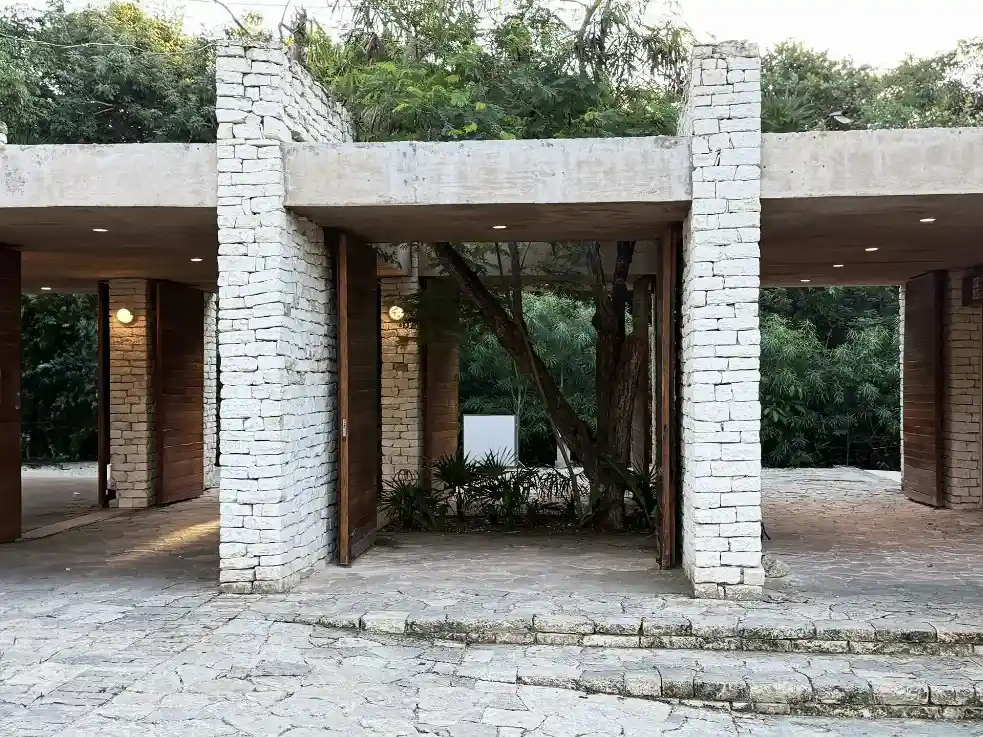
Three separate tickets, one for each protected area you’ll pass through.
| Site | Mexican citizens | Foreign visitors |
|---|---|---|
| Zona Arqueologica de Tulum (INAH) | 80 MXN | 265 MXN |
| Parque Nacional Tulum (CONANP) | 30 MXN, free Sundays | 65 MXN |
| Parque del Jaguar | Free | 100 MXN |
| Total for all three | 110 MXN (about $6 USD) | 265 MXN (about $14 USD) |
That foreigner total is actually lower than the old flat rate of roughly 515 MXN, which surprises most people when I mention it. The 2026 fee decree, in effect since July 20, also built in a full list of exemptions. Tulum residents, minors, seniors, people with disabilities, retirees, teachers and students, Indigenous residents of neighboring municipalities, and accredited tour guides all enter free. Foreign residents of Mexico also get free entry to the archaeological zone on Sundays.
Buy your ticket at the entrance booth. These days you’ll get a wristband along with it, not a paper stub like a few years back. Payment is cash only, pesos only, no cards and no dollars, so change your money before you get here.
What Changed in Admission Prices for 2026?
I’ll be honest, I expected the 2026 fee decree to change little in practice. I was wrong. It replaced three flat fees with a two-tier system by nationality, plus a full list of exemptions that didn’t exist before. President Claudia Sheinbaum signed it in Tulum alongside Governor Mara Lezama, part of the Plan Tulum Renace, in effect through 2027.
Here’s the detail almost nobody’s reporting. A foreign visitor seeing all three sites now pays 265 MXN total, down from roughly 515 MXN under the old system. That’s a price cut dressed up as a policy announcement.
Do Foreign Residents of Mexico Pay the Local Rate?
Partially resolved. The decree confirms foreign residents get free entry to the archaeological zone on Sundays. That’s the same day Mexican citizens get free entry to Parque Nacional Tulum. What it doesn’t spell out: whether a residency card gets you the citizen rate on a regular weekday.
I’ve had guests ask me this directly. My answer: bring your residency card and passport, and ask at the window. Some report it works, others aren’t asked at all. Until INAH clarifies, that’s the real answer, not a guess dressed up as one.
How to Get to the Ruins?
Getting here works for pretty much any budget. Here’s the full rundown.
- Private tours: Guided, round-trip transport from your hotel with an expert guide.
- Private transfers: Round-trip transportation, without the guide.
- Rental cars: Full flexibility. Confirm insurance and permit first.
- Taxis: Available in Tulum, Playa del Carmen, Cancun, and nearby towns. Comfortable, pricier.
- Biking and scooters: Fun if you’re staying in Tulum town. Bring your own lock.
- Colectivos: Budget-friendly, unpredictable schedules. Not the safest option.
- ADO bus: Reliable between cities, affordable, bookable online.
- Tren Maya: Scenic and affordable, though you’ll need to reach the nearest station first.
How Do You Get There from Cancun?
If you’re wondering how to get to Tulum from Cancun, renting a car is quickest. Not driving? The ADO bus runs to Tulum Centro, then a taxi or colectivo covers the last stretch.
How Do You Get There from Playa del Carmen?
Renting a car from Hertz or Europcar gives you the most flexibility at a reasonable cost.
How Do You Get There from Tulum Town?
Bicycles and scooters win here: cheap and easy. Taxis and colectivos work too.
Is There a Parking Lot at the Site?
Yes, but arrive early. The official lot fills by 9:30 or 10am, right at the entrance, a two-minute walk to the ticket booth. Expect to pay 100 to 150 MXN (about $5-8 USD) per day.
I was skeptical the parking situation could really be that confusing. It is. There’s a free lot nearby too, but the signage is bad enough that locals still give directions the old way. Past this gas station, then that one. Budget the extra time, or the 100-150 MXN, and use the paid lot.
A shuttle connects the parking area to the ruins entrance, adding a few minutes either way.
Is There a Train or Shuttle on Site?

After the ticket booth, an open-air shuttle takes you to the ruins entrance and on to Parque del Jaguar, with several stops along the way.
I’ve never seen a separate charge for it, and it’s genuinely one of the more pleasant parts of getting around.
What Facilities Are Available on Site?
Restrooms sit near the entrance. Shops and small restaurants cover snacks. Information booths are scattered through if you need directions.
The one facility worth planning around: the air-conditioned museum at Parque del Jaguar. It’s closed on Mondays, so plan your visit day accordingly. There’s no other shade or cooling inside the archaeological zone — any other day, that museum is your best break from the sun.
Bring your own water. There’s nowhere to refill inside, and the shops near the entrance are your last stop before you’re on your own for heat.
Exploring the Ruins: A Visitor’s Guide
This next stretch walks through the structures worth slowing down for, in the order you’ll reach them from the entrance.
What Are the Main Highlights to See?
Tulum is famous for El Castillo, its cliffside temple that doubled as a lighthouse for incoming canoes. It’s also the only major Maya city built directly on the ocean. Beyond El Castillo, the key structures are the Temple of the Frescoes, known for its murals, and the Temple of the Descending God. Add the Templo del Dios de Viento and the Wall and Watchtowers, which once defended the site.
People often ask what is Chichen Itza when comparing the two. Tulum is smaller in scale. What it offers instead is a seaside setting and a working defensive wall you can still walk beside, something Chichen Itza doesn’t have.
For a deeper look with a dedicated guide, a Private Tulum Ruins Tour lets you take this at your own pace. Add a cenote with our Private Tulum and Cenote Tour if you want to cool off after.
El Castillo (The Castle)

Here it is, El Castillo, the single most recognizable building in Tulum. It sits at the site’s edge, on that 12-meter (39-foot) cliff, and stands about 7.5 meters (25 feet) tall. The Maya built it between the 13th and 15th centuries, in stages, on top of an earlier, columned structure.
Studies point to three purposes: ceremonial center, navigational landmark for boats, and fortress. Look closely at the doorways for serpent motifs carved into the lintels, a detail most visitors walk right past.
Local tradition holds the building was oriented to welcome the sunrise, honoring the god Kukulcan each morning. Whatever you believe, the ocean view from up here is one of the most photographed angles in the Yucatan Peninsula.
Casa del Halach Uinic (The Palace of the Great Lord)
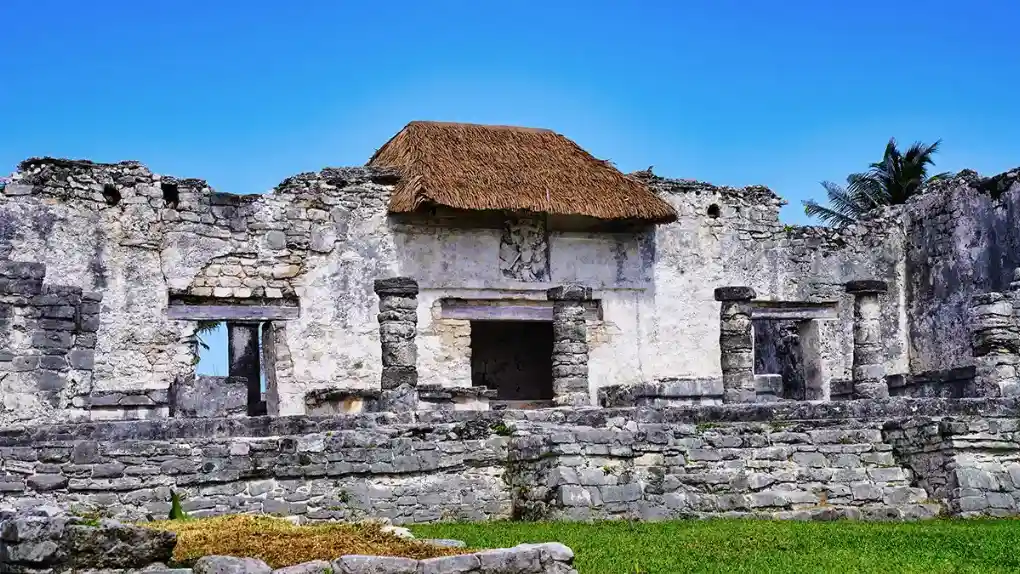
This was the official residence of Tulum’s supreme ruler, the Halach Uinic, where political business, administration, and major ceremonies happened, not just his daily life. The palace sits inside Tulum’s main ceremonial cluster, close to El Castillo, the Temple of the Frescoes, and the House of Columns.
Temple of the Frescoes

The Temple of the Frescoes did double duty: ceremonial space and astronomical observatory. Built around 1200 to 1450 CE, this two-story temple is best known for how well its murals survived.
The mural runs across three levels: the Maya underworld, the world of the living, and the realm of the creator and rain gods. It’s painted in black, green, yellow, and red. One figure in the living-world section rides what looks like a four-legged animal. Some archaeologists read that as evidence the temple was still in use as late as 1518.
House of the Columns

One of the largest and most complex buildings on site, part palace and part administrative center. High-ranking officials lived here, and it hosted council meetings and religious ceremonies too. The layout is L-shaped, four rooms, entrance facing south. Six columns hold up the main hall, exactly where the name comes from.
Temple of the Descending God

Perched on the cliff edge over the Caribbean, this temple is easy to spot from its carvings alone. A figure dives headfirst toward the sea, carved above the doorway, built around 1200 to 1450 CE on the foundation of an earlier structure.
Local tradition identifies the figure as the Maya bee god, Ah Muu Zen Caab, descending from the heavens to bring renewal. It’s a common theme in Maya belief around cycles and rebirth. The temple also lines up with sky events like Venus’s rising and the equinoxes, no accident for a culture that tracked the sky this closely.
Templo del Dios de Viento
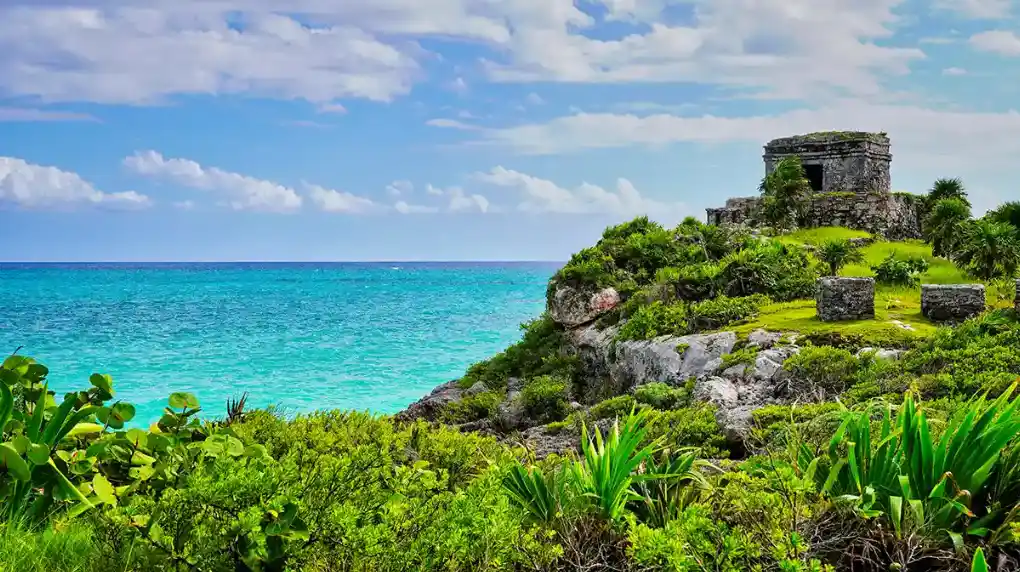
One of the smaller temples on site, but the view earns it. Perched on a rocky outcrop facing the Caribbean, it was built around 1200 to 1450 CE. A small sea-facing altar inside was used for rituals tied to wind, weather, and navigation, all critical for a working port city.
Local tradition holds this temple doubled as a hurricane warning system, with an opening designed to whistle as storms approached. I can’t verify that myself, but it’s a story local guides have told for generations. The exterior wind god carvings back the idea this spot was genuinely about weather and safe passage.
The Wall & Watchtowers

A massive limestone wall wraps three sides of Tulum, with the Caribbean guarding the fourth. It stands 3 to 5 meters tall (10 to 16 feet), up to 8 meters thick (26 feet) in places. It runs roughly 400 meters (1,300 feet) along the section parallel to the sea. Add another 170 meters (560 feet) on each of the north and south sides.
I figured the wall’s numbers were just wrong on one site or the other. They’re not. Add up all three stretches and the full perimeter runs closer to 700 to 800 meters. That’s exactly where you’ll see slightly different totals, depending on which stretch a source measures.
The name Tulum literally means “wall” in Yucatec Maya, no coincidence. Its job was defense, protecting the port from invaders, and watchtowers in the northwest and southwest corners covered both the coastline and the inland approach.
Can You Swim at the Beach Below the Ruins?

You can, but let me correct an expectation first. This isn’t Tulum’s best beach, not even close. It’s a working stretch of coastline with rocky sections, and a small fishing area to one side that can feel rough for swimming. If a great beach is the goal, look elsewhere in Tulum. This isn’t it.
What is genuinely worth it is the view: standing on the sand, looking back up at the ruins on the cliff. That’s the postcard shot, and it’s real. Find the entrance to Parque del Jaguar inside the ruins, pass the newer lighthouse tower, and the beach path is right beside it.
One rule that trips people up: once you leave into Jaguar Park, you can’t go back into the ruins. See them first, beach second.
How Bad Is the Sargassum at This Beach?
It depends on the month, and it’s arriving earlier than it used to. Sargassum, the brown seaweed that piles up on Caribbean beaches, now starts showing up as early as February in this part of the coast. That’s earlier than the traditional summer peak.
When it’s bad, it covers the sand and clouds the water, making an already-rocky spot even less appealing. The EPA notes that decomposing sargassum can cause skin irritation from tiny organisms living in it. It also releases hydrogen sulfide, which can irritate eyes and airways.
My advice: don’t build your visit around swimming here. Come for the El Castillo view from the sand, and if the water looks heavy with sargassum, skip the swim.
What Kind of Wildlife Can You Find Here?
Iguanas, coatis, and a handful of bird species share the site, and if you’re lucky, sea turtles show up on the beach below.
Most Common Wildlife Sightings
- Iguanas: Everywhere, sunbathing on the stones. Genuinely photogenic, unbothered by visitors.
- Coatis: Common, foraging in small groups, sometimes with young. Don’t try to pet or feed one.
- Coastal birds: Herons, frigatebirds, and shorebirds along the cliffs and beach. Toucans and macaws belong more to the jungle interior.
- Other mammals: Raccoons and foxes occasionally, in the forested edges.
- Sea life: Sea turtles are your best shot from the beach. Dolphins and manatees are possible but rare.
Top Tips for Your Visit
What Should You Pack for Your Visit?
- Water, more than you think: Almost no shade and nowhere to refill once inside.
- Sun protection: Sunscreen, a hat, sunglasses. You’re exposed most of the visit.
- Comfortable shoes: Uneven stone and gravel paths. Skip sandals.
- Light, breathable clothing: Mexico’s sun is strong outside the December to March window.
- Bug spray: Coastal doesn’t mean bug-free.
- Swimwear under your clothes: Save yourself the hassle of changing later at Jaguar Park.
That’s the full list. It’s a half-day trip, not an expedition, so don’t overpack. On water and food specifically, there’s a rule worth knowing.
Can You Bring Water and Food Inside?
Officially, yes, as long as it’s a reusable bottle or container, not single-use plastic. That’s the rule as written.
In practice, enforcement is inconsistent. Most visitors walk through with a reusable bottle and snacks, zero issue. I’ve also heard from travelers whose water got questioned or held at the gate, even when following the rules. It seems to depend on which staff member is checking bags that morning.
My honest advice: bring a reusable bottle, keep snacks packed away rather than in hand, and don’t argue if something gets flagged. Going in under-hydrated over a gate disagreement is the worse outcome, given how little shade there is inside.
What are the Official Rules at the Archaeological Site?

The rules here keep this place standing for the next generation.
- No smoking anywhere, beach included.
- No climbing, leaning, touching, or sitting on any pyramid, temple, or ruin. Security can and will escort you out.
- Don’t touch, feed, or bother the wildlife.
- Don’t pick, collect, or cut any vegetation.
- Use the trash bins.
- Stay in marked visitor areas only.
- Graffiti, vandalism, or damage to any structure is a serious legal offense.
- Drones need a permit from INAH beforehand, no exceptions.
- Plastic bottles and large backpacks are discouraged, and bags get checked sometimes, though how strictly varies by the guard on duty.
Is It Worth Hiring a Guide?
Yes. A certified guide, credentialed through INAH, the same institute that manages the site, turns a walk past old stones into real understanding. You learn who built it, why, and what it meant to the people who lived here.
Guides run 200 to 800 MXN at the entrance depending on group size, or come included with a private tour. I’ve watched the same ruins land completely differently for a guest with context versus one without.
It’s a pattern that’s held for as long as I’ve guided here with Xaman-Ha Connections, over a decade now. The group with a guide leaves talking about Zama and the wind god. The group without leaves with photos, and not much else.
Tulum Archaeological Site FAQ
Can you climb the ruins?
No. Climbing or touching the structures isn’t allowed, one of the reasons they’re still standing for future visitors.
How much time should you plan for a visit?
One to two hours covers it comfortably. Add extra time for Parque del Jaguar or the beach afterward.
Are the Tulum Temples worth visiting compared to other sites?
Yes. If you want a half-day trip that pairs real history with a genuinely unique ocean view, this is a top option in the region.
Are the Outside Vendors Official?
Stick to the official ticket counters. Look for INAH staff and marked signage at the white office buildings. That’s how you know you’re paying the real price, not a markup from someone outside the gate.
What currencies are accepted for payment at the Tulum Mayan Temples?
Mexican pesos only, cash, at every ticket point across all three sites. Exchange your currency before you arrive.
Are these ruins Mayan or Aztec?
Maya. Both civilizations get lumped together in pop culture, but they’re distinct. The Aztec empire was centered around what’s now Mexico City, hundreds of miles from here; Tulum was built and occupied entirely by the Maya.
Chichen Itza or Tulum: which should you visit?
Different trips, honestly. Chichen Itza wins on scale, a New Seven Wonders site. Tulum wins on setting: nothing else puts you on a cliff over the Caribbean. Our Chichen Itza vs Tulum comparison, linked earlier in this guide, breaks down which fits which traveler.
That covers it: history, fees, crowds, and the practical stuff nobody tells you until you’re at the gate. Get here early, bring cash and water, and you’ll understand why this cliff has pulled visitors back for centuries. ¡Nos vemos pronto en Tulum!
Explore Our Private Tours
Visit our homepage to explore all our services, or browse our Riviera Maya private tour catalog for unforgettable experiences.
